
The Counteroffensive Begins
Rebecca's office became command central over the next two weeks. We spread everything out—my documentation, their documentation, bank records, custody schedules, every text message and email. 'We're not just defending against their claims,' Rebecca said, highlighting sections of their evidence with ruthless precision. 'We're going to expose the entire operation. Show the court exactly what they've been doing.' We built a timeline proving Vanessa had started her documentation before any conflicts existed. We compiled evidence of manufactured scheduling conflicts, complete with metadata showing she'd sent 'urgent' requests at times she knew I couldn't respond. We had financial records showing their household income had actually increased over the eighteen months they claimed to be burdened by excessive costs. Rebecca drafted motions, prepared exhibits, contacted witnesses. My sister agreed to testify about the original invoice and my calm response. Lily's teacher provided a statement about Lily being well-cared-for and appropriately provided for. We weren't leaving anything to chance. If they wanted a financial showdown, I'd give them one they couldn't afford to finish.
 Image by FCT AI
Exposing the Timeline
The first court hearing felt like stepping into a different dimension where truth actually mattered. Rebecca presented our timeline first—a comprehensive exhibit showing that Vanessa had begun her documentation campaign within two weeks of meeting Daniel, months before any custody disagreements had occurred. 'Your Honor,' Rebecca said, laying out the evidence with surgical precision, 'the respondents claim they were forced to document due to ongoing parenting concerns. But as you can see from the metadata on these files, Mrs. Harrison began creating her records before there was any custody dispute to document.' She projected messages on the screen: Vanessa's notes about Lily's clothes, her food, her behavior—all dated from a time when our co-parenting relationship had been, by everyone's account, perfectly civil. The judge leaned forward, studying the dates with a frown. She flipped through the printed exhibits, comparing timelines. Her expression shifted from neutral interest to something sharper. The judge's expression changed when she saw the dates—Vanessa had started her file the week she met Daniel.
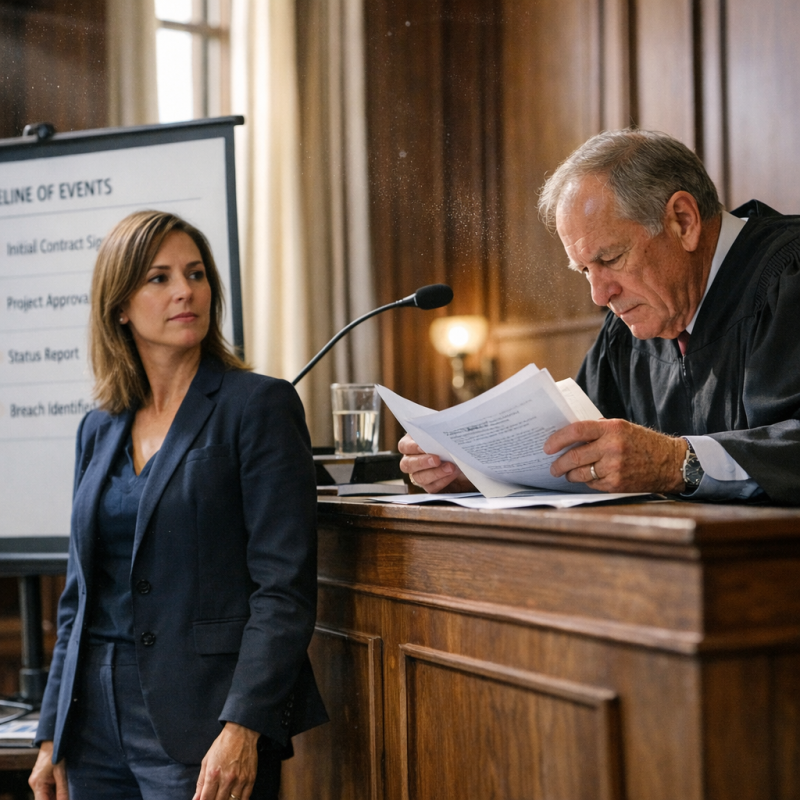 Image by FCT AI
The Manufactured Conflicts
Rebecca moved methodically through each 'conflict' they'd documented, showing the court exactly how they'd been manufactured. She pulled up text exchanges where Vanessa had requested schedule changes with impossible timing—asking me to swap a weekend with only two days' notice, then documenting my 'inflexibility' when I couldn't accommodate. 'Notice here,' Rebecca pointed to the screen, 'that Mrs. Harrison sent this request at 9 PM on a Thursday, asking for a swap that weekend, knowing from previous exchanges that my client works weekends and can't make last-minute changes. And here'—she advanced the slide—'is her follow-up message to Mr. Harrison, documenting the "rigidity" and "lack of cooperation."' We went through instance after instance: requests sent when I was at work, demands for items she knew I didn't have, questions timed to create maximum inconvenience. Each one documented as evidence of my inadequacy. I watched Vanessa's face from across the courtroom. Her lawyer whispered to her, but she didn't respond. Vanessa sat perfectly still as her own messages were read aloud, showing she'd requested impossible accommodations on purpose.
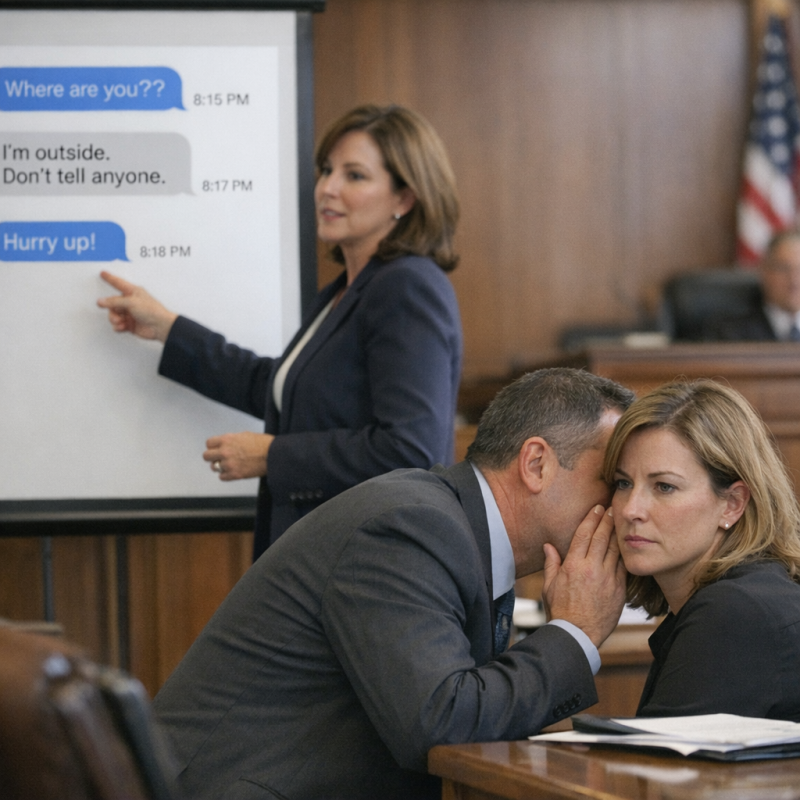 Image by FCT AI
The Child Interrogation
Then Rebecca presented the evidence I'd found most disturbing: transcripts of conversations Vanessa had initiated with Lily, systematically questioning her about life at my house. We had them because Daniel had accidentally included them in a shared document folder—questions about what I fed her, what time she went to bed, whether I'd taken her to the doctor, what I'd said about Vanessa. 'Your Honor,' Rebecca said quietly, 'these interrogations happened regularly, often right after transitions between households. A nine-year-old child was being used as an intelligence source to build a case against her mother.' The judge's expression hardened. She read through the transcripts slowly, her jaw tightening. Daniel and Vanessa's attorney objected, argued that they were simply checking on Lily's well-being, that any parent would ask these questions. Rebecca countered with expert testimony about the psychological impact of using children as informants. The judge set down the papers and looked at all of us—me, Daniel, Vanessa, the attorneys. The judge asked to speak to Lily privately, and my heart stopped.
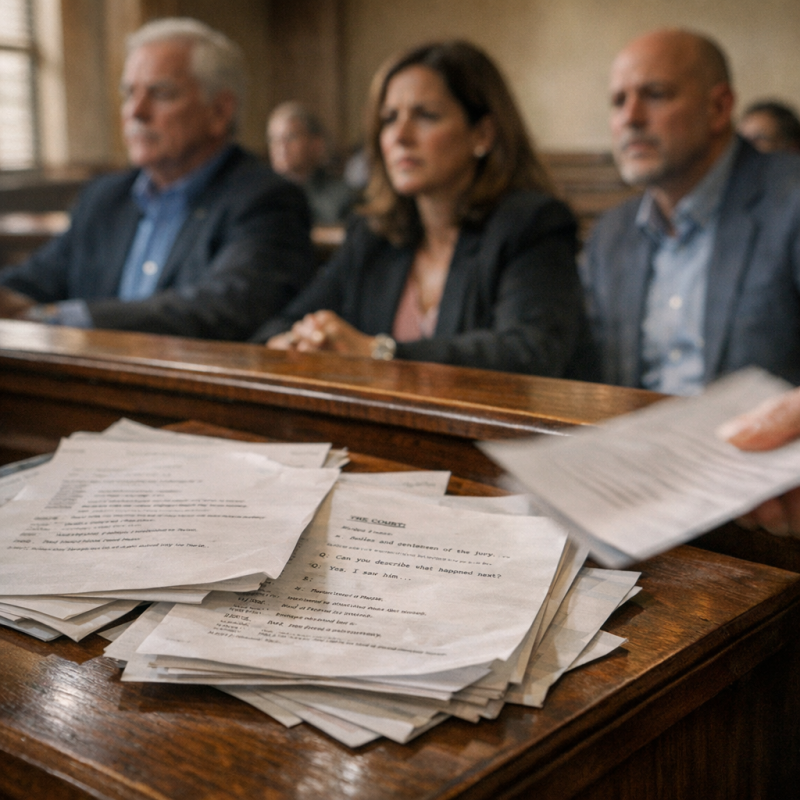 Image by FCT AI
Lily's Voice
The wait while Lily met with the judge in chambers felt endless. Rebecca sat beside me, outwardly calm, but I could see her fingers tapping against her notepad. Daniel and Vanessa whispered with their attorney across the aisle. I tried not to think about what Lily might be saying, whether she'd feel pressured, whether this whole process was harming her in ways I couldn't protect her from. After forty minutes, the judge returned alone. Lily had already been taken to the waiting area by the court liaison. The judge's face was unreadable as she took her seat, but something in her posture had shifted. 'I've spoken with Lily,' she began, her voice measured and precise. 'She's a bright, articulate child who clearly loves both her parents.' My stomach clenched. But then the judge's gaze moved to Vanessa. 'However, she expressed considerable discomfort with what she described as feeling 'quizzed' and 'tested' during her time at her father's home. She reported feeling responsible for reporting back on her mother's household.' The courtroom went very still. The judge looked directly at Vanessa and said, 'Using a child to build a case is unacceptable.'
 Image by FCT AI
The Financial Revelation
Rebecca saved the financial evidence for last, and it was devastating. She presented bank records showing that Daniel and Vanessa's household income had actually increased by 18% over the period they claimed to be financially burdened by my 'inadequate parenting.' She showed their discretionary spending—vacations, home renovations, a new car—while they simultaneously claimed they were struggling to cover 'basic necessities' for Lily. 'Your Honor,' Rebecca said, organizing the exhibits with practiced efficiency, 'the respondents aren't seeking a custody modification because of genuine concerns about the child's welfare. They're seeking to reduce their financial obligation through child support modification.' She pulled out their own documentation, showing how every claimed 'expense' corresponded to standard parenting costs already covered by the existing support arrangement. The judge studied the financial records, her expression growing increasingly stern. She made notes, asked pointed questions about their income sources and expense claims. Then she set down her pen and looked directly at Daniel and Vanessa. The judge ordered a full financial audit of their household expenses—including the 'costs' they'd claimed I caused.
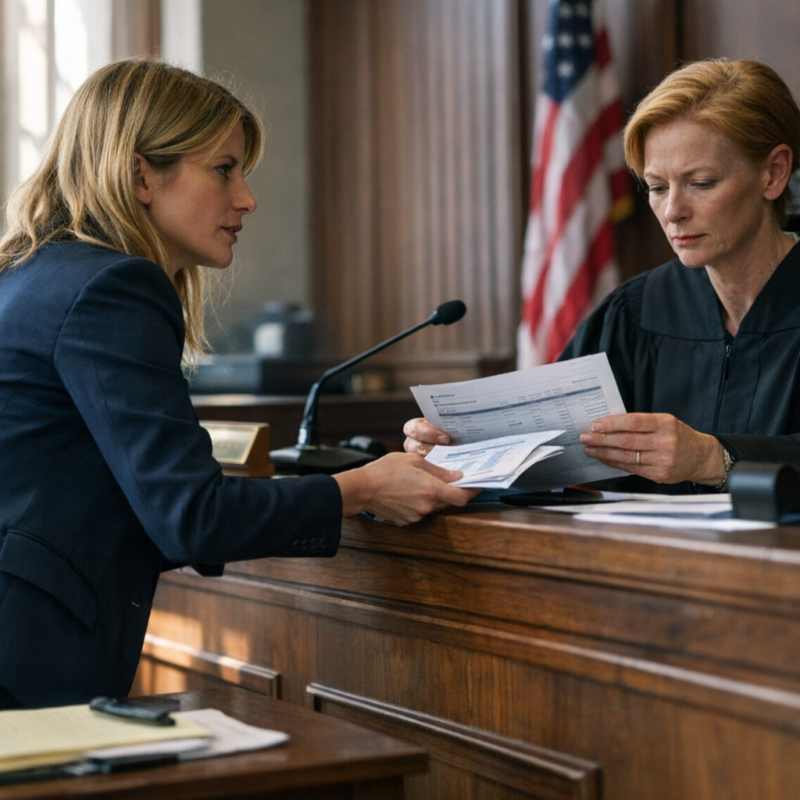 Image by FCT AI
The Ruling
The judge didn't hesitate. She looked up from her notes and delivered her ruling with the kind of clarity that left no room for appeals or misunderstandings. The custody arrangement would remain exactly as it was—no modifications, no adjustments, no compromises. Lily would continue her current schedule with me as primary custodian. Then came the part that made Rebecca's mouth twitch into the smallest smile: Daniel and Vanessa were ordered to pay my lawyer fees in full within thirty days. The judge cited their 'frivolous and financially motivated petition' as the reason. She noted that dragging a child through unnecessary court proceedings based on fabricated expenses constituted an misuse of the family court system. I watched Daniel's face go pale. Vanessa sat rigid beside him, her jaw clenched so tight I could see the muscle jumping. Rebecca gathered her files with professional composure, but I caught the satisfied gleam in her eye. We'd documented everything, proven everything, and now they'd pay for every billable hour they'd forced me to incur. As we left the courtroom, Vanessa wouldn't meet my eyes—but Daniel looked devastated.
 Image by FCT AI
The First Handoff After
The first custody exchange happened three days later in the usual parking lot. I arrived early, watching Daniel's car pull in with the kind of careful distance I'd perfected over months of managing these handoffs. Neither of them got out right away. When Daniel finally opened his door, he moved like someone twice his age. Vanessa stayed in the passenger seat, staring straight ahead. Lily climbed out of the back with her backpack, and Daniel handed me her overnight bag without a word. No pleasantries. No forced conversation about her week. Just silence that felt heavier than any argument we'd ever had. I wanted to feel triumphant, but mostly I felt tired. Lily looked between us, reading the tension the way kids do, then took my hand. 'Ready?' I asked her. She nodded quickly, relief visible in her shoulders as they dropped. We walked to my car together, her fingers tight around mine. I buckled her in, started the engine, pulled out of the parking space with the practiced ease of routine. As I drove away with Lily, she said quietly, 'I'm glad it's over.'
Healing Forward
We built new routines over the following weeks—simple, predictable things that gave Lily the stability she'd been missing. Breakfast together before school. Homework at the kitchen table while I prepped dinner. Friday movie nights where she picked whatever she wanted, even if it meant watching the same animated film for the fourth time. I started asking her more questions about how she was feeling, not just about her day. She talked about being worried during the court stuff, about not understanding why Vanessa seemed so angry all the time. We worked through it slowly, carefully, with honesty appropriate for a nine-year-old. I also started seeing Marcus again—coffee at first, then dinner when Lily was at Daniel's. He'd waited patiently through the entire nightmare, never pushing, just checking in occasionally to make sure I was okay. Now we were taking things slow, rebuilding what we'd paused when everything got complicated. One evening after Lily was asleep, we sat on my back porch with a bottle of red, talking about nothing important. Marcus asked if I was ready to try again, and for the first time in months, I thought I might be.
 Image by FCT AI

History's most fascinating stories and darkest secrets, delivered to your inbox daily.
The Final Invoice
The check arrived exactly twenty-nine days after the ruling—one day before the court deadline. It came via certified mail, requiring my signature, as though they wanted proof they'd complied. I held it for a long moment, this piece of paper representing every hour Rebecca had spent demolishing their case, every document we'd meticulously organized, every expense they'd tried to fabricate. Then I did something that probably seems petty, but felt absolutely necessary: I went to the office supply store and bought two matching frames. I framed Vanessa's original itemized invoice on the left—the one demanding $5,000 for expenses I'd supposedly caused. On the right, I framed the court-ordered payment receipt for my lawyer fees, which came to significantly more. I hung them side by side in my home office, where I see them every time I sit down to work. They remind me of what I learned through this whole mess—that some people will use anything, even spreadsheets, when they want to hurt you. But they also remind me that calm documentation beats emotional reaction every single time. Every time I look at them hanging side by side in my office, I remember: some battles are won not with anger, but with documentation.
 Image by FCT AI